Type: Hiking shelters
Location: Chatel d'Argent, Aosta, Italy
Client: Reuse Italy
Project: RCA
Phase: Competition
Date: 2024
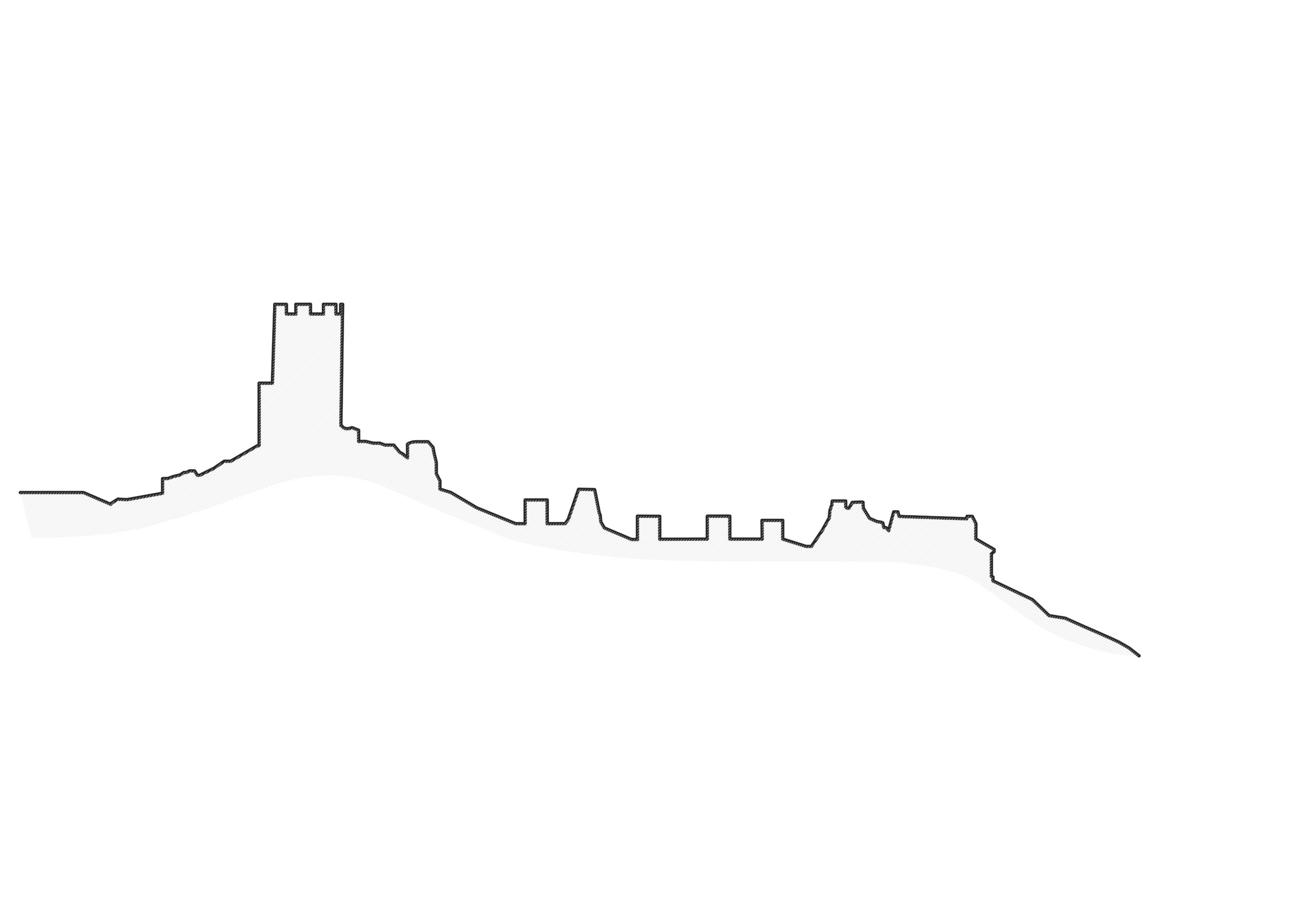
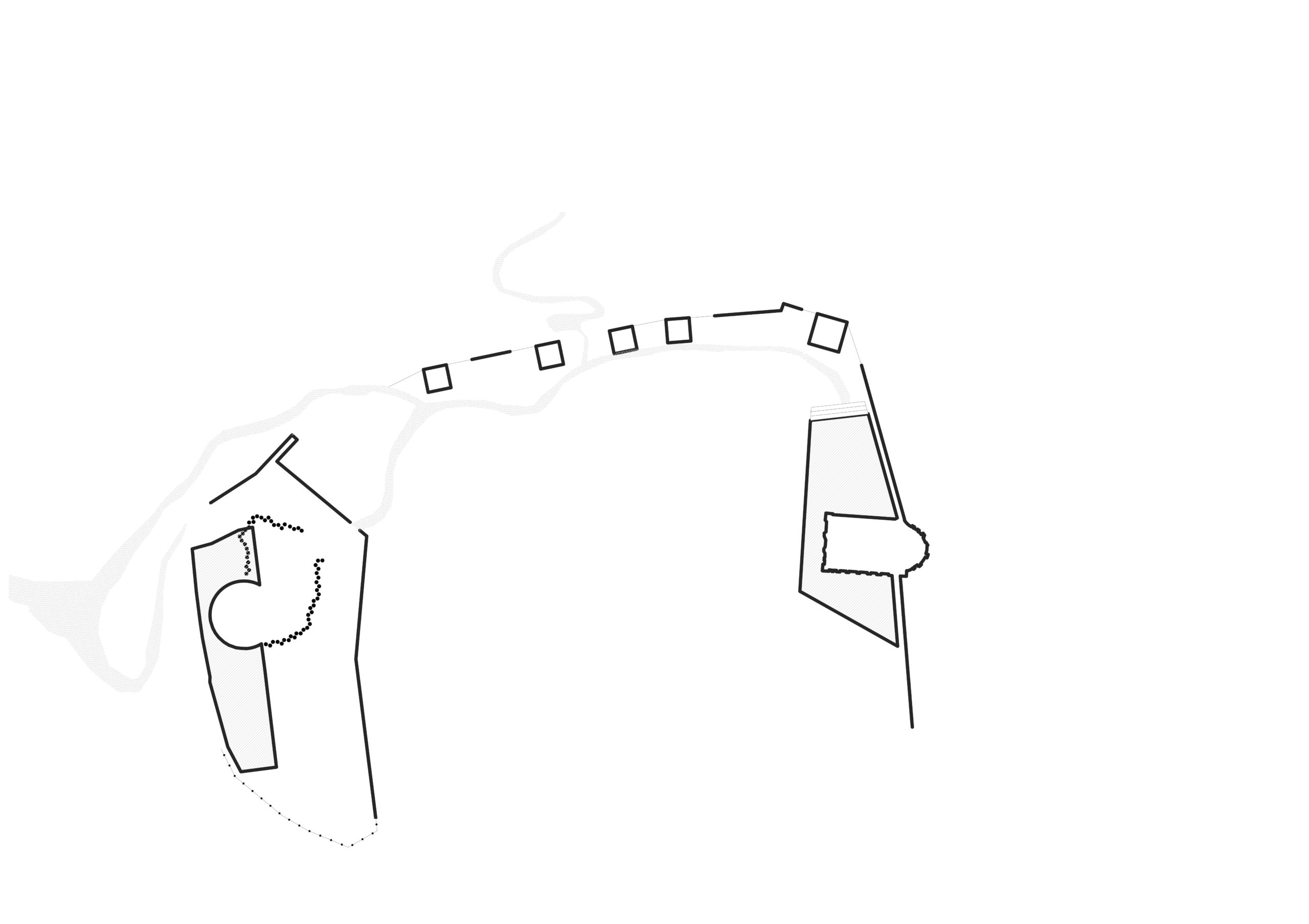
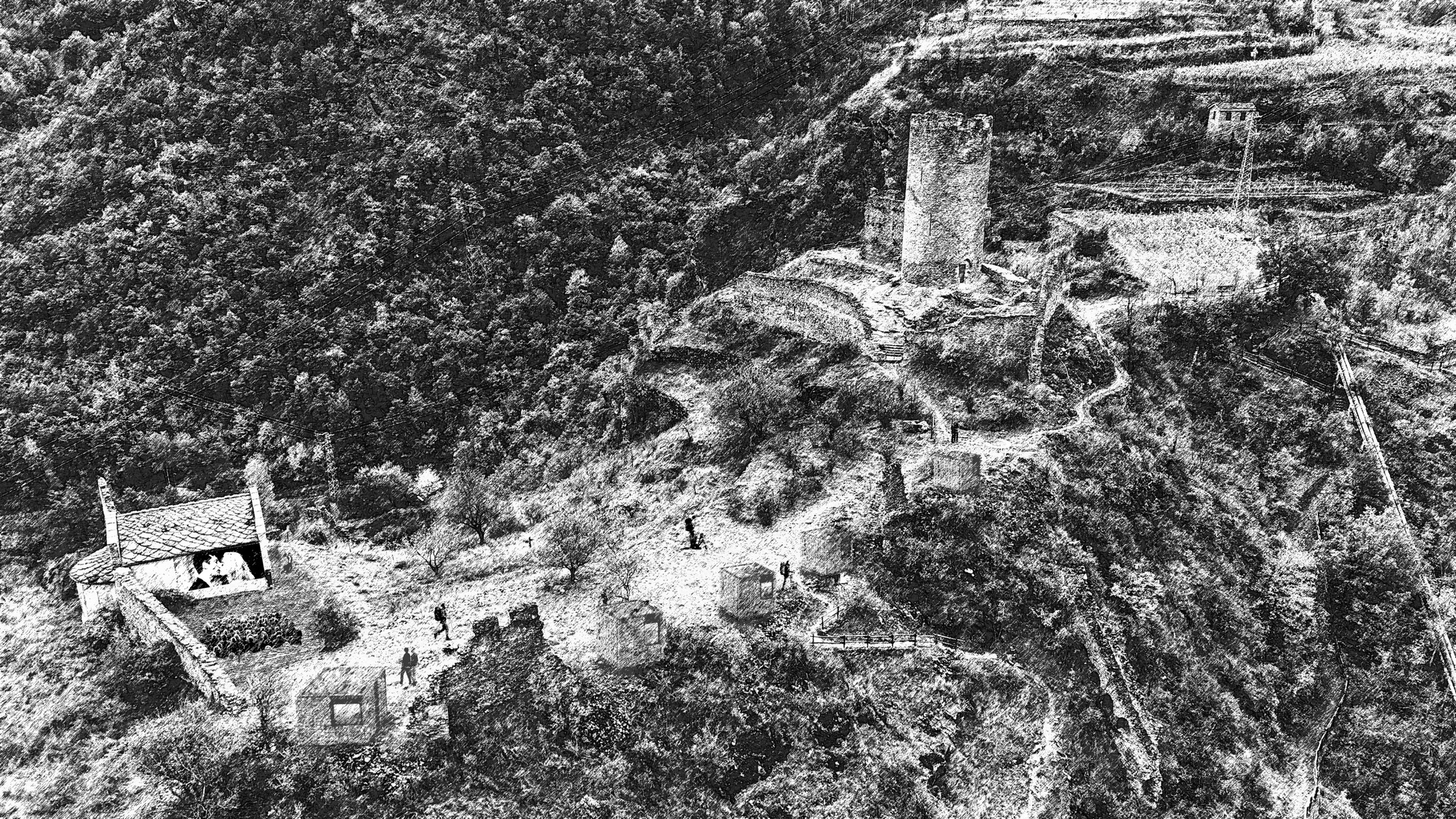
The landscape: On a large scale, the overall concept aims to restore a crenellated line in the landscape, visible from the distant horizon. It retains the site's permanent boundaries by encircling it, as if recognizing the shape of the ancient walls. It seeks to blend into the place to which it belongs, reflecting it like a mirror, through the use of the most abundant material on the site, stone. A simple and unique logic has been applied to the entire project: metal contains and stone fills. Like the public spaces that surround historical objects with stone sidewalks and metal railings, the envelope of the boxes is designed with steel gabions filled with stone. In this way, the addition of new elements does not disrupt the overall historical landscape.
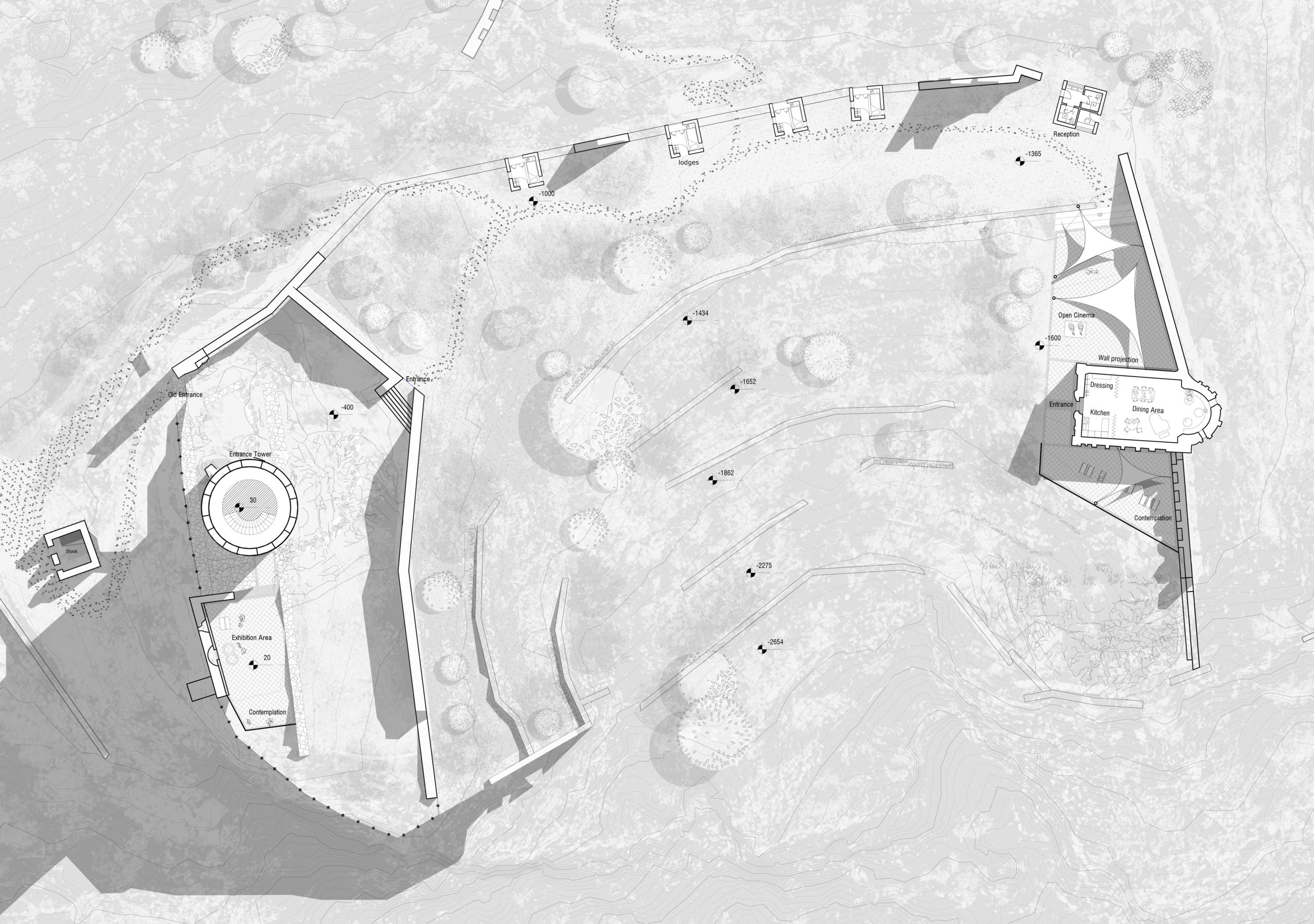
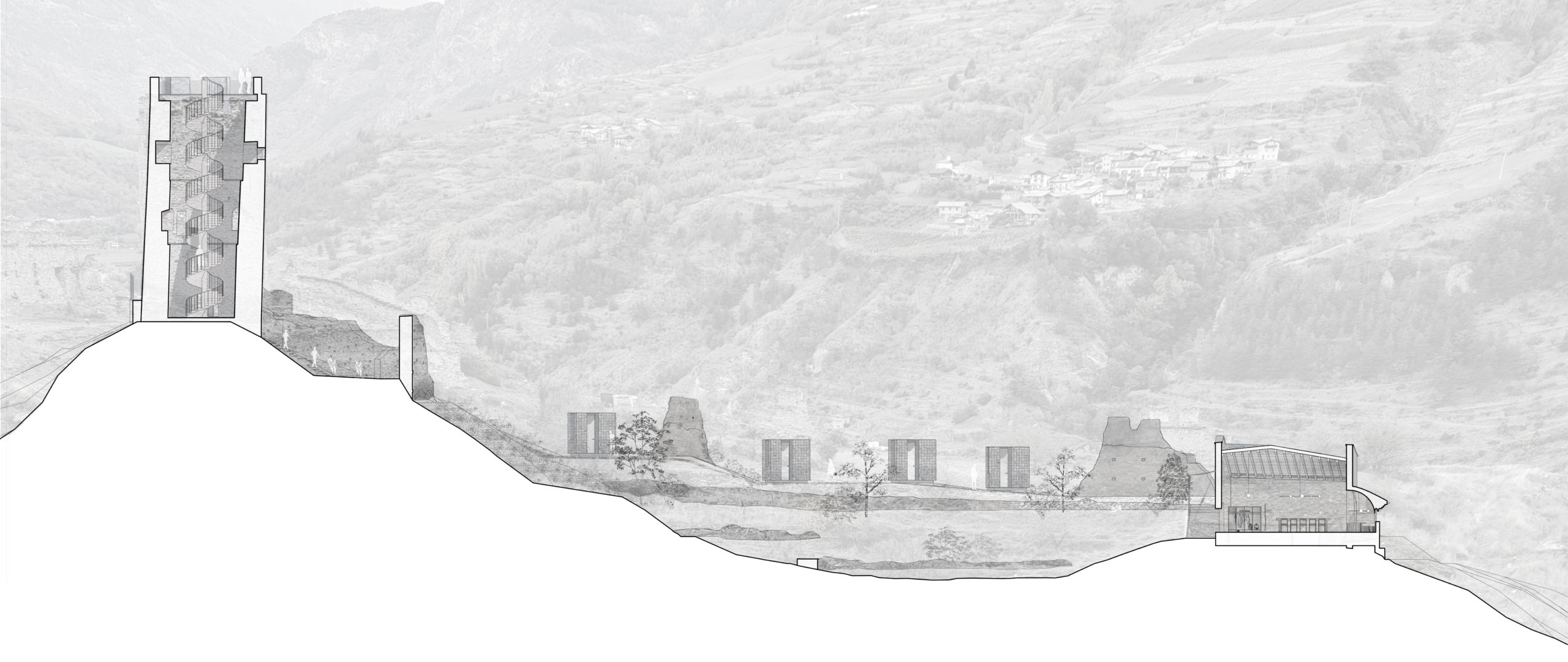
Access: At the site level, the project aims to enhance the space, framing and connecting the two focal points of the tower and the chapel in order to promote their use for public events such as concerts, movies, theater performances, exhibitions, etc. The contours of the architectural objects secure access and delineate a minimalist enhancement of the line of ruined fortifications. On one side, the path redraws the original access route, while on the other it arrives between the boxes that mark an entrance gate. The objects are arranged along the ridge path like observers of the valley facing the surrounding mountains. The project plans to create access gates to the castle and chapel, echoing the framing of the tower's opening. Inside the chapel, we proposed the installation of a central metal staircase that does not rest on the walls, leaving them intact and allowing visitors to read the stone palimpsest. From the top, a panoramic view opens up to hikers. Opposite, the chapel offers a common interior space for dining or relaxing.
Objects: These are four boxes measuring 3m x 3m x 3m, housing two bunk beds with storage space for hiking equipment and a small desk. Detached by a metal base, these openwork volumes use stone from the site to blend into the background. Behind this skin, the six facades are made of sandwich panels: burnt wood on the outside, a layer of cork as rigid insulation, and a layer of interior wood panels, identical to the built-in furniture. The thickness of the wall allows for wooden window frames. Finally, the roof is covered and protected by thin sheet metal with vegetation inside. The archaeological ground remains intact thanks to the self-supporting elements. Our office focuses on bio-sourced and indigenous materials to minimize carbon impact and create a sustainable environment for users. and the reuse of steel elements. A fifth box, measuring 4m x 4m x 3m, houses two toilets/showers and a reception area. This is the most visible structure, as it is located at the end of the corner alleyway, and also allows the site to be monitored and films to be shown on the chapel wall. It connects the different spaces and marks the corner of the fortress. The aesthetics of the narrow openings, reminiscent of the loopholes in the surrounding walls, have preserved the language of the fortress.